
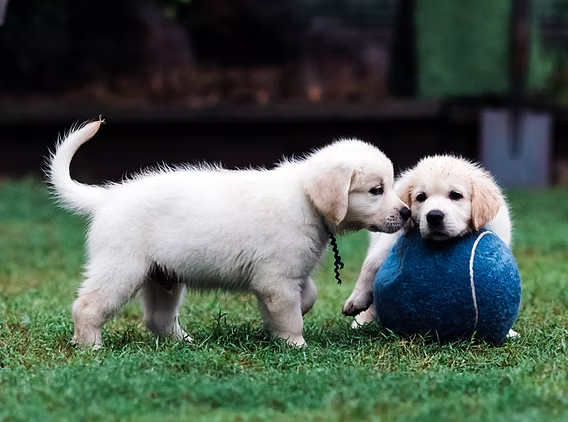
Socializing a puppy is one of the best gifts you can give yourself and your future dog. If it is done well, it builds confidence, it prevents many behavior problems and it makes every walk, park visit and playdates more fun for the both of you.
Simple, stress free steps to build your dog’s confidence
How to start
You should start small and keep things positive. Introduce your dog to calm and vaccinated dogs you already know (if you don’t know someone whose dogs is vaccinated, our app offers a 1st vaccinated social meet up). Start in a neutral space like a friend’s house or a dog park and make sure to praise and give tasty treats for every new interaction. Try to keep the sessions short, around 10 to 15 minutes so it doesn’t overwhelm your dog and give them time to rest.
What to do
Vary the experiences gradually. Let your dog watch other dogs from a distance when you go on walks. Visit dog friendly areas preferably during quiet times of the day and enroll (if you can) in a reinforcement puppy class once your vet says it’s safe. Each time your dog notices another dog and stays calm, mark it with a cheerful voice and if available a treat or congratulation pets and move away before they get worried. This will teach them that the presence of other dogs is positive.
Common socialization mistakes dog owners should avoid
The most common mistake is trying to go too fast. Forcing your dog into crowded dog parks, events that are too loud or rough play with dogs that they are unfamiliar. It can create fear instead of confidence, especially near the beginning. Don’t risk wasting all your previous efforts by rushing. Another mistake is letting off leash greetings happen with dogs you do not know. An aggressive or pushy dog can leave a negative lasting impression.
Pay attention
Avoid punishing your dog for backing away, growling or hiding. Those are early warning signs that your dog is uncomfortable. If you punish them for it, there is a possibility that your dog skips the warning and reacts with more intensity later on. Instead, you should calmly create distance, give your dog (and yourself) a break and plan a better and more controlled environment for your next exposure.
Indoor and outdoor games that teach good dog manners
Training games help dogs learn how to control their impulses around other dogs. Practice simple cues like “come here”, “sit” or “give the paw” indoors first. After that play games like “look at that” (reward your dog for glancing at another dog and then look back at you) in a low distraction area outdoors. These skills give your dog something to do besides pulling, jumping or barking when they see another dog. Teaching your dog to look at you can show him/her that you are calm and that your dog has nothing to worry about.
You can also play impulse control games like waiting at the doorway, offering eye contact before giving your dog a toy or leaving it on a mat while you move around or have your back turned. Once your dog can focus on you thanks to these games at home, you can start practising near calm dogs (that you know preferably) at a distance and reward any type of calm behavior like sniffing each other, calm body language and soft eye contact.
When your dog is shy or reactive, what to do next ?
If your dog hides, barks or growls intensely at other dogs, don’t be afraid to go back one or two steps and make things easier. Shorten the sessions and increase the distance from other dogs and focus on rewarding the sight of dogs with high value reward or treats until your dog can stay relaxed enough. Skipping stressful dog park visits in favor of 1 on 1 meetings with well socialized and gentle dogs can help rebuild trust.
Don't hesitate to ask for help
If there is a strong reactivity or fear, do not hesitate to get support early. A vet or a certified trainer with experience in behavior can help a gradual behavior training plan to keep your dog feeling safe and learn new associations at the same time. With a lot of patience, a realistic goal and a lot of rewards, most shy dogs can learn that other dogs are not only safe but a possible life long friend.